

Every year, lakhs of tenants and landlords sign rent agreements without reading half of what's in them. Then something goes wrong — a deposit dispute, a notice period fight, an unexpected eviction — and suddenly everyone's asking what the agreement actually said.
A rent agreement isn't paperwork you rush through. It's the one document that decides who's right when things go sideways. Here's what actually needs to be in it, and what most people get wrong.
What a Rent Agreement Actually Is?
A rent agreement is a legal contract between the property owner and the tenant. It spells out the rent amount, the deposit, the duration of the stay, and the responsibilities of both sides.
In most Indian cities, this comes as an 11-month agreement. That's not a random number — agreements under 12 months don't require compulsory registration under the Registration Act, which saves both parties time and registration fees. It's renewed every 11 months instead.
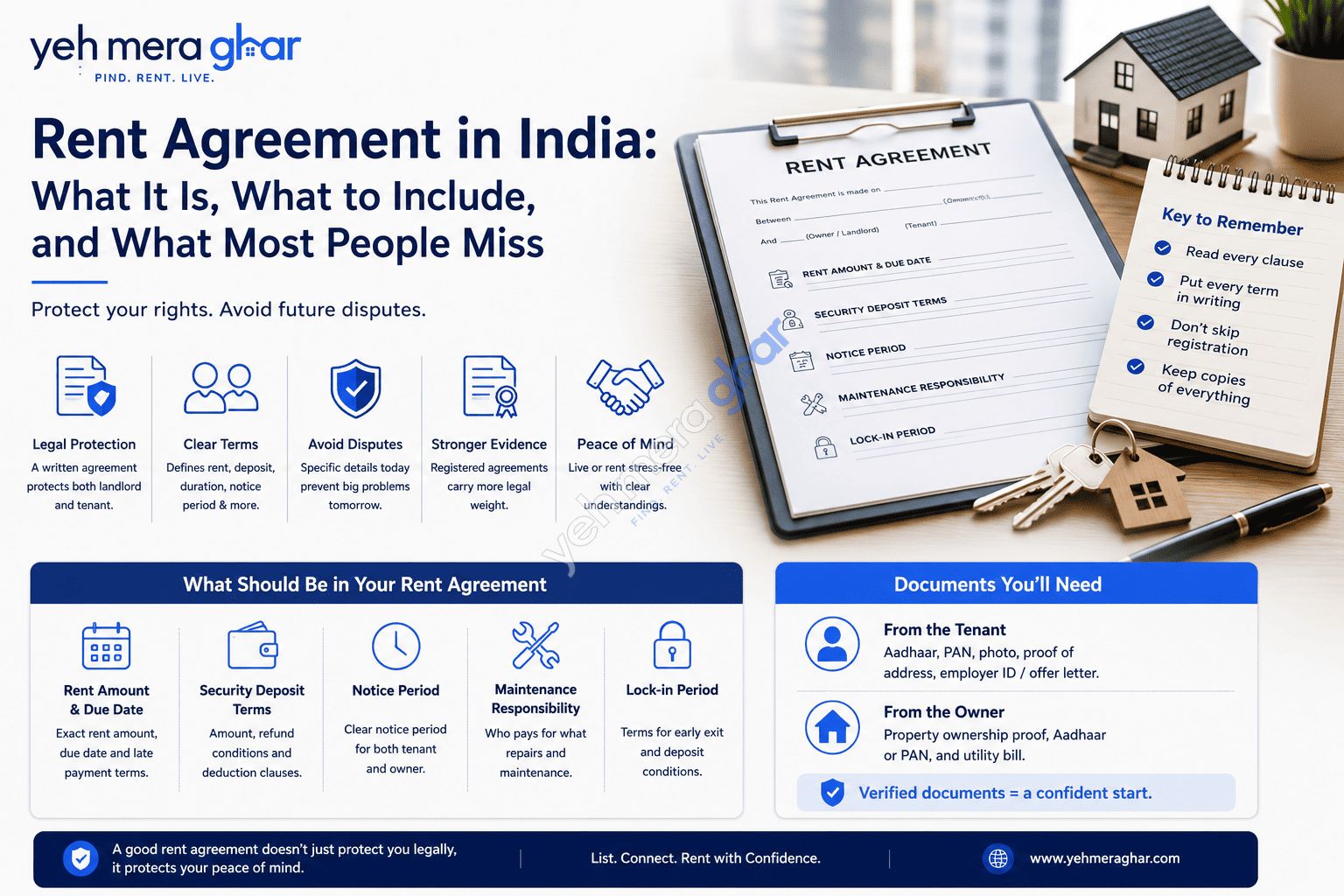
Documents You'll Need
Before you sign anything, both sides need to have these ready:
- From the tenant: Aadhaar card, PAN card, a passport-size photo, and proof of current address. If you're a working professional, your employer ID or offer letter often gets asked for too.
- From the owner: Proof of property ownership (sale deed or property tax receipt), Aadhaar or PAN, and the property's electricity or water bill as address proof.
If you're going through a broker or platform, they'll usually verify these documents before connecting you — which is exactly why verified listings save you a step here.
What Should Be in the Agreement (and Often Isn't)
A lot of agreements are templates copied from the internet, missing details that matter the moment there's a disagreement. Make sure yours has:
- Rent amount and due date.Not just the figure — the exact day of the month it's due, and what happens if it's late.
- Security deposit terms. How much, and exactly when and how it gets refunded. Deduction clauses for damages should be specific, not vague.
- Notice period. Usually one to two months for either side. This is the most disputed clause in rental conflicts, so get the number in writing.
- Maintenance responsibility. Who pays for what repairs. A leaking tap is a different conversation than a broken geyser, and the agreement should say who handles each.
- Lock-in period. If there is one, it should state clearly what happens if the tenant leaves early — full deposit forfeiture, partial, or none.
Common Mistakes That Cause Problems Later
Most disputes don't come from bad intentions. They come from things nobody bothered to write down.
Verbal promises about rent hikes, painting costs, or furniture get forgotten the moment there's a disagreement. If it was agreed upon, it belongs in the document — not in someone's memory.
Skipping registration is another one. An unregistered agreement still holds some legal weight, but it's far weaker as evidence if a dispute reaches court. For higher rent amounts or longer stays, registration is worth the extra step.
And then there's the rush. Tenants under pressure to move in fast, or owners eager to fill a vacancy, often sign without reading the fine print. A five-minute read can save months of back-and-forth later.
Why This Matters More Than People Think
A rent agreement is searched, downloaded, and signed thousands of times a day across Indian cities — and most of that traffic is people trying to understand it for the first time, usually under time pressure.
The agreements that hold up are the specific ones. Specific dates, specific numbers, specific responsibilities. Vague language is where disputes are born.
How Yeh Mera Ghar Helps
When you connect with a verified owner or tenant on Yeh Mera Ghar, you're already starting from a cleaner position — documents checked, listings verified, and a direct line of communication instead of relying on a broker's version of events.
It doesn't replace getting your agreement right. But it removes a lot of the guesswork that usually comes before you even get to that stage.
The Short Version
Get your documents ready on both sides, put every agreed term in writing, don't skip registration for longer or higher-value stays, and never sign anything in a rush. A rent agreement is only as good as the details inside it.